![Shaanxi Lingkang Times Biotechnology Co., LTD]() Shaanxi Lingkang Times Biotechnology Co., LTD
Shaanxi Lingkang Times Biotechnology Co., LTD

If you source natural berry extracts, develop dietary supplements or formulate clean-label skincare goods, one question frequently comes up: Are blueberries high in anthocyanins?
The straightforward answer is yes. Blueberries rank among the most anthocyanin-dense temperate berries available on the global raw material market. Their deep blue-purple skin holds concentrated anthocyanin complexes, making fresh blueberries and standardized blueberry extract popular raw materials across health food, beverage and cosmetic manufacturing. Still, many buyers misunderstand how growing conditions, varieties and processing methods directly affect final anthocyanin levels. This guide breaks down key facts for formulators, brand owners and bulk ingredient purchasers.
What Are Anthocyanins, and Where Do They Accumulate in Blueberries?
Anthocyanins belong to water-soluble flavonoid polyphenols, responsible for the distinct blue and purple pigment seen in blueberry skin. In fresh blueberry fruit, the vast majority of anthocyanins gather within the outer peel and outer flesh layers, while the pale inner pulp contains far lower concentrations.
Blueberries carry a unique blend of anthocyanin subtypes, mainly malvidin, delphinidin, petunidin, cyanidin and peonidin glycosides. This diverse profile sets blueberry anthocyanins apart from many other berry sources. Unlike single-component anthocyanin raw materials, this natural mixture delivers broad-spectrum antioxidant activity, which explains consistent demand from product developers worldwide.
How High Is the Anthocyanin Content in Blueberries? Wild vs Cultivated
Fresh cultivated highbush blueberries contain measurable levels of anthocyanins, generally ranging between 70 mg and 430 mg per 100 grams of fresh fruit. However, significant differences exist between cultivated blueberries and wild lowbush blueberries.
Wild blueberries naturally develop higher anthocyanin concentrations. They grow in harsher natural environments with stronger sunlight exposure, which stimulates greater polyphenol production. Industry testing shows wild blueberries can contain roughly 30% more anthocyanins than common cultivated varieties. This gap matters greatly for manufacturers creating high-potency finished formulas.
Important to note: ripeness directly impacts anthocyanin levels. Fully mature, deep-colored blueberries carry far more active compounds than unripe pale fruit. Reliable extract suppliers strictly time harvesting to maximize natural anthocyanin content before processing.
Blueberry Fruit vs Standardized Blueberry Extract
Raw fresh or dried blueberries naturally contain anthocyanins, but the concentration remains relatively low for commercial production. Most B2B manufacturers rely on concentrated blueberry extract to achieve consistent, usable anthocyanin levels in finished goods.
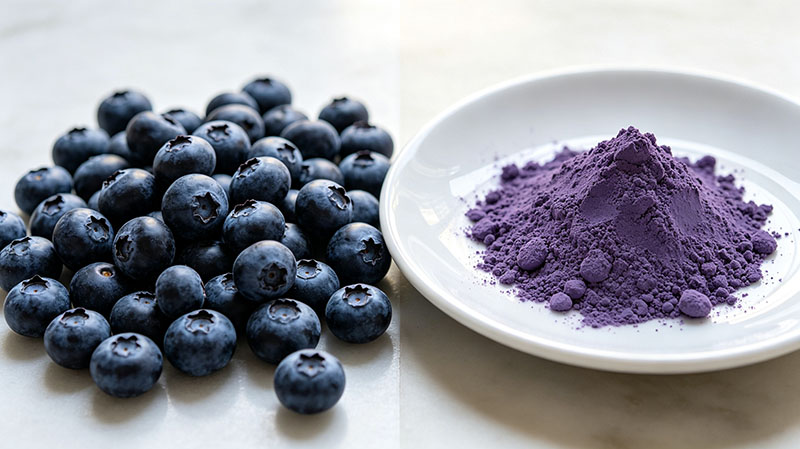
Through low-temperature extraction, membrane purification and spray drying, producers create standardized blueberry extract powder. Common commercial specifications include 5%, 15%, 25% and up to 36% total anthocyanins verified via HPLC testing. These concentrated extracts remove excess fruit fiber and sugar while locking in anthocyanin compounds, delivering stable dosing for capsules, functional drinks and skincare serums.
Many new buyers confuse whole blueberry juice powder with standardized anthocyanin extract. Ordinary spray-dried blueberry juice powder retains the natural anthocyanin ratio of fresh fruit, while standardized extract undergoes enrichment to hit fixed anthocyanin content markers required for supplement label claims.
Core Functional Benefits of Blueberry Anthocyanins
The market demand for blueberry-derived anthocyanins relies on their widely recognized functional properties.
First, anthocyanins act as powerful natural antioxidants, neutralizing free radicals triggered by UV exposure, environmental pollution and normal metabolic aging. In oral supplements, blueberry anthocyanins support eye comfort, help maintain vascular health and reduce mild oxidative stress.
For cosmetic formulations, anthocyanins deliver soothing and protective effects. They help defend skin against external oxidative damage, improve visible dullness and support balanced skin tone. As natural plant pigments, they can also replace synthetic colorants in clean-label personal care ranges.
In functional food and beverage production, blueberry anthocyanins add nutritional value while offering natural purple color without artificial dyes. They fit perfectly into the growing consumer preference for non-synthetic, plant-based food ingredients.
Main Industrial Applications of Anthocyanin-Rich Blueberry Raw Materials
1. Dietary Supplement Industry
Standardized blueberry extract rich in anthocyanins is a staple raw material for eye-support supplements, antioxidant capsules, daily nutrition tablets and compound berry powder blends. Brands favour blueberry anthocyanins because consumers easily recognize blueberries as a trusted superfood, simplifying marketing and product storytelling.
2. Functional Drinks & Healthy Food
Food-grade blueberry extract works well in fruit beverages, herbal functional drinks, nutritional meal powders, gummy supplements and baked functional snacks. The mild natural berry flavour integrates smoothly with other ingredients, and anthocyanins provide natural colouring without artificial additives.
3. Cosmetic & Personal Care Manufacturing
Water-soluble blueberry anthocyanin extract is added to facial essences, toners, masks and soothing creams. Formulators choose this raw material for its antioxidant and soothing characteristics, suitable for gentle skincare and anti-oxidation product lines targeting all skin types.
Key Factors That Affect Anthocyanin Stability During Processing
Anthocyanins are heat-sensitive active substances. High-temperature processing will degrade anthocyanin content and reduce final product efficiency. Reputable manufacturers adopt low-temperature extraction and vacuum concentration processes to minimize thermal damage.
Storage conditions also matter. Finished blueberry extract powder needs sealed, cool and dry storage away from direct sunlight. Exposure to heat, moisture and strong light gradually breaks down anthocyanins during long-term transport and warehousing.
When selecting suppliers, confirm production methods and ask for batch COA reports listing total anthocyanin test values. Avoid low-cost rough-processed raw materials with unstable active ingredient levels.
Tips for Sourcing High-Quality Blueberry Anthocyanin Extract
If you plan to purchase bulk blueberry extract rich in anthocyanins, focus on these practical standards:
1. Confirm clear anthocyanin specifications with HPLC testing reports; avoid suppliers that only offer ratio extracts without quantified active content.
2. Check raw material origin: clarify whether the extract comes from cultivated or wild blueberries to match your formulation potency requirements.
3. Verify production technology, prioritizing low-temperature physical extraction without harmful residual solvents.
4. Request microbial, heavy metal and pesticide residue test data to meet food-grade or cosmetic-grade export standards.
5. Confirm solubility, flavour profile and colour stability to fit your specific product formula system.
To restate clearly: Blueberries are indeed high in anthocyanins, especially wild lowbush varieties. Fresh fruit contains naturally occurring anthocyanins concentrated mainly in the skin, while standardized blueberry extract delivers concentrated, consistent anthocyanin levels ideal for industrial manufacturing.
For brands developing antioxidant supplements, eye-support products, natural colour beverages or plant-based skincare, anthocyanin-rich blueberry extract remains one of the most marketable natural berry raw materials.
If you need bulk supply, customized anthocyanin specifications or free samples of premium blueberry extract, feel free to reach out for detailed technical data sheets and latest wholesale pricing.