![Shaanxi Lingkang Times Biotechnology Co., LTD]() Shaanxi Lingkang Times Biotechnology Co., LTD
Shaanxi Lingkang Times Biotechnology Co., LTD

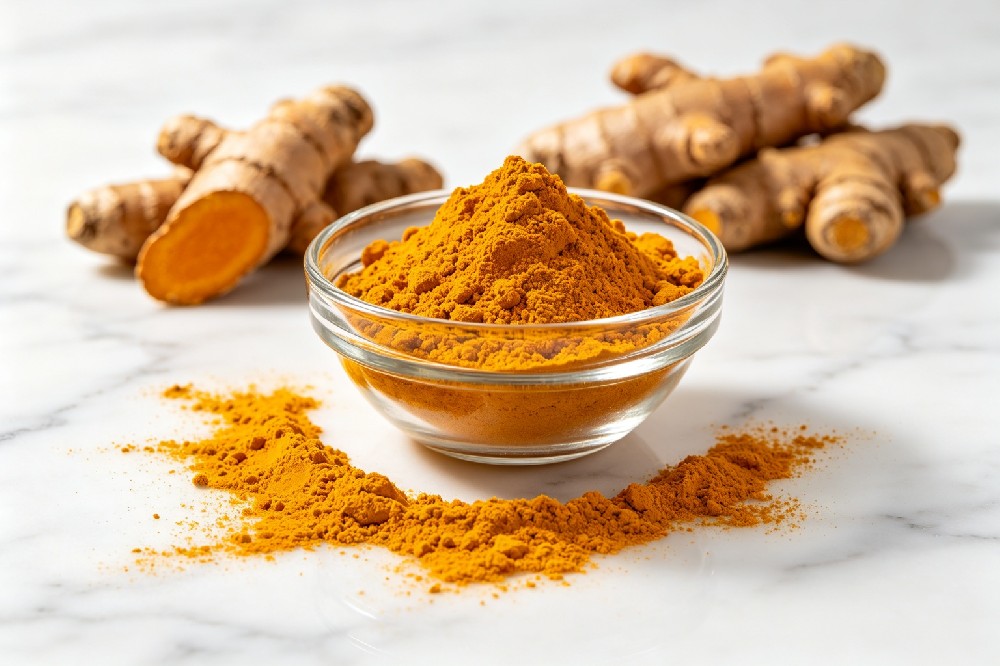
Why 95% became the default spec
Ask ten supplement brands which turmeric raw material they buy and most will name the same thing: curcumin extract 95%. That wasn't true ten years ago, when 10:1 turmeric powders and 20% standardized grades still held real market share. The 95% grade won on practical grounds, not marketing ones. It makes dosing, label claims and cost-per-active calculations simpler at every stage after the drum lands in your warehouse.
Fresh turmeric rhizome (Curcuma longa) carries roughly 2% to 5% curcuminoids, and that figure moves with the harvest, the growing region and how long the root sat in storage before processing. Solvent extraction followed by crystallization and purification lifts it above 95%, confirmed by HPLC. What you are really paying for at that point is consistency, batch after batch.
What the "95%" on the CoA actually refers to
One detail catches out first-time buyers. The 95% figure is total curcuminoids, not curcumin on its own. A normal natural profile looks something like this:
Curcumin: around 70% to 80%
Demethoxycurcumin: around 15% to 20%
Bisdemethoxycurcumin: around 2% to 6%
If your label claim or your customer's specification is written against curcumin specifically rather than total curcuminoids, put that in the RFQ. It affects which batches can be shipped to you, and it affects the price.
Test method matters as much as the number
Two certificates can both say 95% and mean different things. UV-Vis spectrophotometry tends to read higher than HPLC on the same sample, because it picks up compounds that are not curcuminoids. If a quotation looks unusually cheap for the grade, check which method sits behind the number before you compare it against anything else.
Ask which monograph the supplier tests against, USP, EP or an in-house method, and ask for the raw chromatogram rather than just the summary page. A lab that runs the test properly will send it without hesitating.
The adulteration problem nobody puts in their brochure
Turmeric has a long history of adulteration, and some of it carries into extracts. Three things worth screening for:
Lead chromate, historically added to raw turmeric to brighten the colour. This is why heavy metal testing on every batch is not optional paperwork.
Synthetic dyes such as Sudan I to IV, used to compensate for weak colour.
Synthetic curcumin produced from vanillin. It is chemically close to the natural molecule and will pass a standard HPLC assay. Carbon isotope ratio testing is what distinguishes it, and it is worth running once on any new supplier.
None of this is common with an established factory, but the cost of finding out late is a recall, not a credit note.
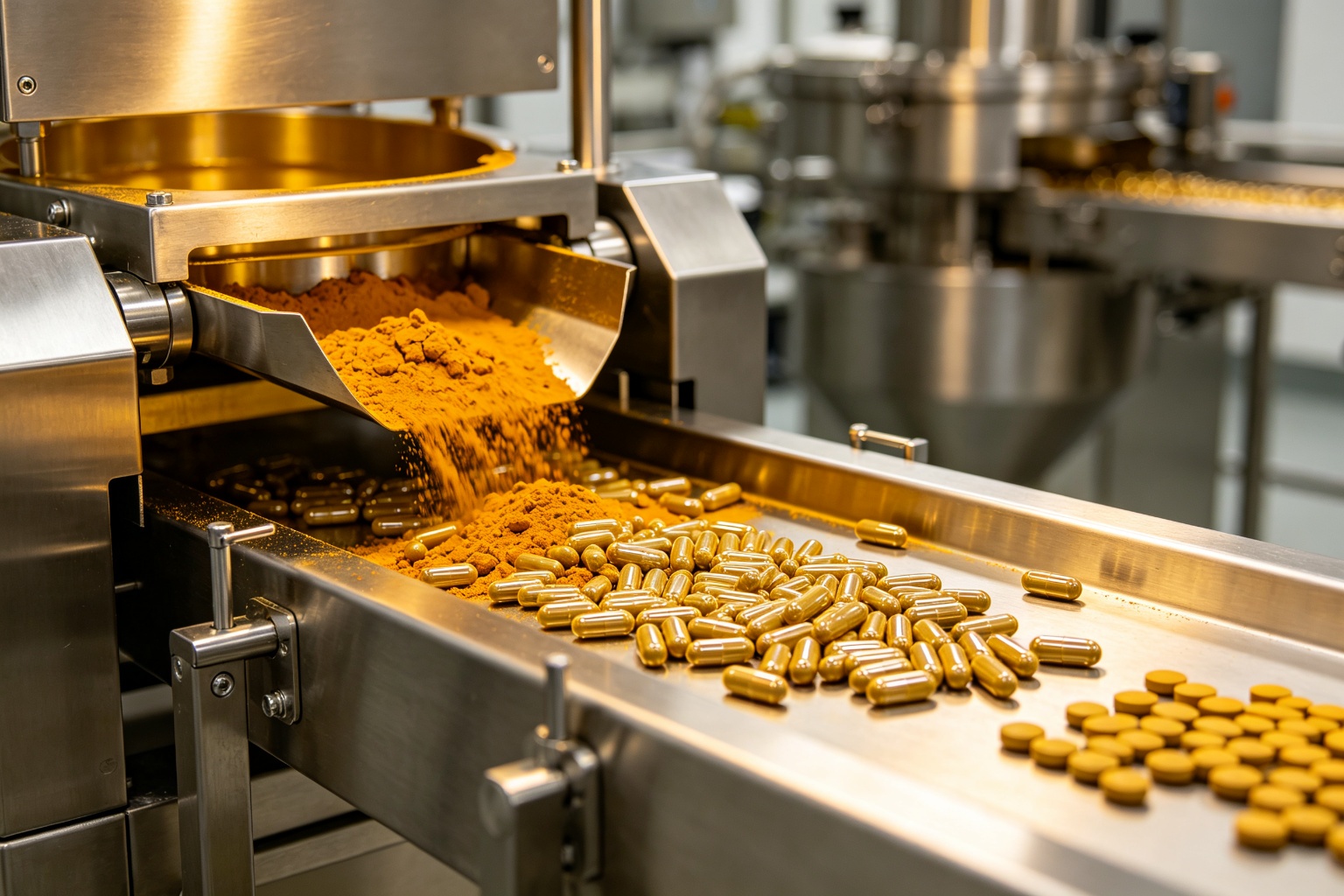 [Image: GMP-certified curcumin extraction workshop and in-house HPLC lab]
Documents to have in hand before the deposit goes out
Batch-specific, not generic. A CoA with no batch number on it tells you nothing about the material in the drum.
HPLC Certificate of Analysis confirming total curcuminoids at 95% or above
Heavy metals: lead, arsenic, cadmium, mercury, against the limit that applies in your destination market
Microbiology: total plate count, yeast and mould, E. coli, Salmonella
Residual solvent and pesticide screening
GMP, ISO 9001 and HACCP certificates for the plant, plus the business licence if you have not worked with the company before
For the EU, also confirm the extraction solvent is on the permitted list under Directive 2009/32/EC. Buyers shipping to the US usually want a statement covering FDA facility registration as well.
Factory or trading company: how to tell in one email
China produces the bulk of the world's plant extracts, and buying from the plant instead of an intermediary typically takes 15% to 30% off your landed cost per kilogram. The harder part is working out which one you are actually talking to, since almost every website says "manufacturer".
Technical questions sort this out quickly. Ask which extraction solvent they use and how solvent recovery is handled. Ask what their monthly output is for this specific product, not for the whole catalogue. Ask for a video walkthrough of the workshop while you are on the call. A trading company will go quiet, promise to check with "the factory", and come back a day later.
Sample behaviour is the other signal. Anyone can ship a good sample. What matters is whether the third sample matches the first, and whether the commercial batch matches both.
Small details that cost money later
Mesh size affects how the powder behaves in a capsule filler or a tablet press. 80 mesh is standard for curcumin 95%; if your line runs faster or slower than usual, say so and ask for the bulk density figure before you buy.
Curcumin is photosensitive. Standard packing is a 25 kg fibre drum with a double food-grade PE liner, stored away from light and heat, with a 24-month shelf life. If your warehouse is hot or humid, ask for aluminium foil bags inside the drum rather than assuming they are included.
On paperwork, plant extracts normally move under HS code 1302.19. Getting this right in advance saves an argument at customs.
Typical commercial terms in this category
Samples of 100 g are usually free apart from courier cost, which is the standard way to get material into your own lab for verification. Trial orders tend to be 1 kg, and the first commercial order is normally one drum at 25 kg. Production lead time for a stocked grade runs about 7 to 15 days, longer if you need a customised particle size or a specific curcumin-to-total-curcuminoid ratio. Confirm current timing when you enquire, since raw turmeric pricing and availability shift with the Indian harvest cycle.
Working with us
Shaanxi Lingkang Times Biotech Co., Ltd. is based in Xi'an and has 45 years behind it in medicinal and edible plant raw materials. We are a GMP-certified source factory, and curcumin extract 95% sits alongside a wider range of botanical extracts we supply to supplement brands and distributors in North America, Europe, Southeast Asia and the Middle East.
Every batch is tested in our own HPLC lab and ships with a full Certificate of Analysis. If you want to see the chromatogram before you commit, ask and we will send it.
For a free sample and a factory-direct quotation, email lingkangtimes@gmail.com or message us on WhatsApp at +86 133 8494 8393. Tell us your target market and monthly volume in the first message and we can skip two rounds of back and forth.
Frequently asked questions
Is curcumin extract 95% water soluble?
No. Standard 95% powder is poorly soluble in water and is normally formulated with piperine, a phospholipid complex or a water-dispersible carrier. If you need a water-soluble version, that is a different product specification and needs to be quoted separately.
What is the difference between curcumin 95% and turmeric extract 10:1?
Different products entirely. A 10:1 turmeric extract usually carries somewhere between 5% and 10% curcuminoids and retains more of the whole-root profile. Curcumin 95% is a purified, concentrated ingredient intended for dosed supplements.
How should I store it?
Sealed, in the original drum, below 25 degrees Celsius, away from direct light. Curcumin degrades under UV exposure, and colour loss is the first visible sign.
Can you supply organic certified material?
Organic grades exist and are certified separately. Ask when you enquire, as availability and pricing differ from conventional material.