 WhatsApp: +86-13379040254
Welcome to Lingkang Times Biology
 Shaanxi Lingkang Times Biotechnology Co., LTD
WhatsApp: +86-13379040254
Shaanxi Lingkang Times Biotechnology Co., LTD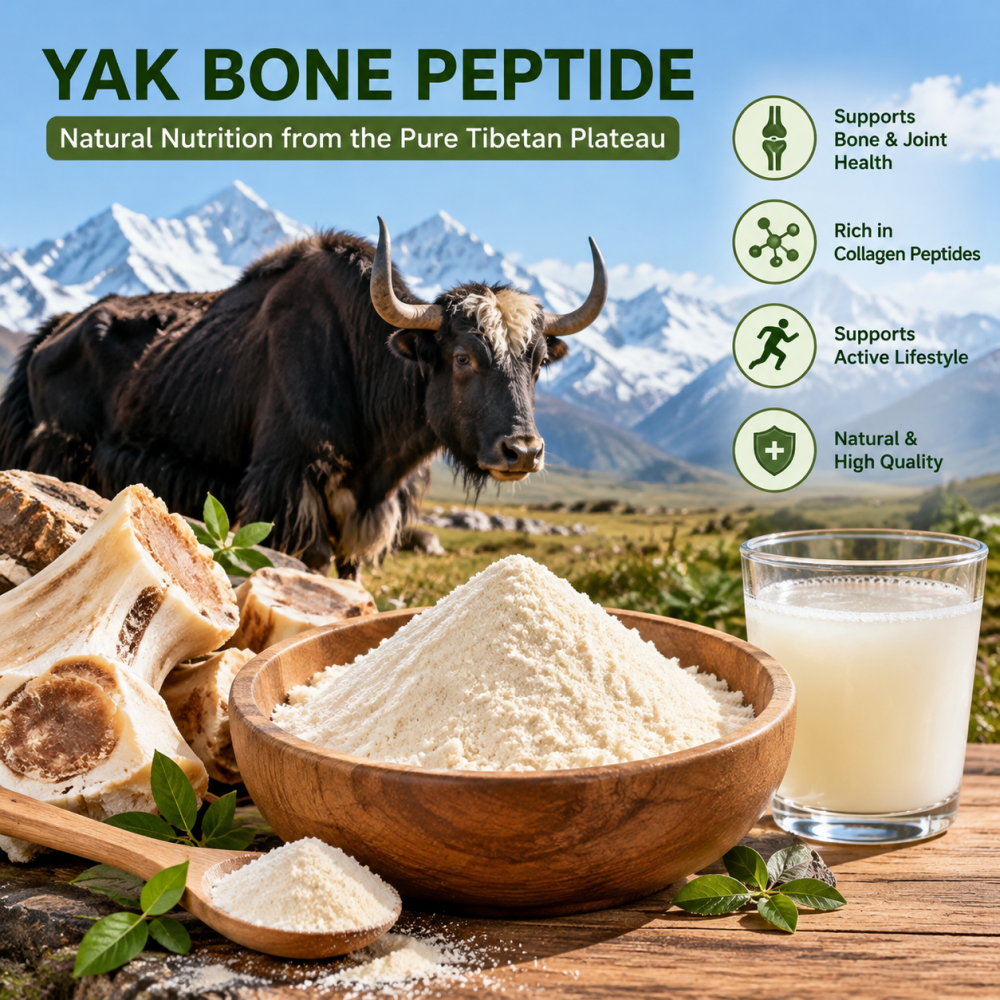
Yak bone peptide keeps turning up in joint and bone formulas, usually beside a photo of the Tibetan plateau and a line about "4,000 meters of altitude." Here is the plain version: how it is made, what is actually in the powder, and how to tell a decent product from an expensive jar of nothing.
WHERE IT COMES FROM
A yak is a long-haired bovine that lives on the Qinghai-Tibet Plateau, mostly between 3,000 and 5,000 meters. They are raised for milk, meat, hide and fiber, and bone is left over from that. To make the peptide ingredient, processors clean and crush the bone, then use enzymes to chop the collagen and bone proteins into short fragments. The end product is a spray-dried powder - light beige, faintly bitter, dissolves in water without much fuss.
"Peptide" only means short chains of amino acids, usually two to twenty of them. Spec sheets quote average molecular weight in Daltons, so you will see "under 1000 Da" or "2000 Da." Smaller fragments cross the gut wall more easily than whole collagen does. That is the entire reason this category exists.
WHAT IS ACTUALLY IN THE POWDER
Protein is the bulk of it, north of 90 percent by weight. The amino acid profile reads like type I collagen, because that is what it is: glycine, proline, hydroxyproline. Bone also brings calcium and phosphorus in roughly the 2:1 ratio found in skeleton, and some extracts carry a little chondroitin sulfate. Whether meaningful amounts of the growth factors people talk about survive digestion is, to be blunt, unknown.
The honest summary: plausible mechanism, encouraging early data, no definitive human proof.
WHAT THE RESEARCH SUPPORTS
Less than the marketing implies. More than nothing.
Most published work is in cells or in animals. Rats on low-calcium diets or ovariectomized models have shown higher bone mineral density and better calcium retention when fed bone-derived peptides. Cell studies suggest the fragments can nudge osteoblasts to build and slow osteoclasts from resorbing. A handful of small human trials in China have measured bone turnover markers and reported modest improvements in joint comfort.
What you will not find is a large placebo-controlled trial showing fewer hip fractures in postmenopausal women. It has not been done, or at least not published anywhere a Western clinician would read. Anyone telling you otherwise is selling something.
HOW TO READ A LABEL
Stated molecular weight. If a brand will not tell you the Dalton range, assume the worst.
Grams per serving, not a "proprietary blend." Trials tend to run 3-10 g a day. A 500 mg capsule is a story, not a dose.
Species and country of origin named. "Bovine bone peptide" is not the same ingredient.
Third-party heavy metal testing. Animals store lead and cadmium in bone. That is a real risk here, and it is the one that actually matters.
Cattle bone is a controlled-risk material. Reputable suppliers source from closed herds and will send you the paperwork if you ask.
WHO SHOULD SKIP IT
Vegetarians and vegans, obviously. Anyone with a bovine protein or gelatin allergy. If you take warfarin or you have kidney disease, check with your doctor first - the mineral load is not trivial. Pregnant or breastfeeding? The data is too thin, so sit this one out.
FAQ
Is yak bone peptide the same thing as collagen peptides?
A close cousin, not the same. Both are hydrolyzed collagen protein, but yak bone also carries bone minerals and small amounts of glycosaminoglycans that hide- or skin-derived collagen does not.
How long before I would notice anything?
Published trials run 8 to 24 weeks, and joint comfort changes are usually reported around week 12. Two weeks is not a fair test.
Can I get the same benefit from bone broth?
Bone broth gives you gelatin and a little mineral, but the protein fragments are larger and the dose varies wildly between batches. Powder is more predictable.
BOTTOM LINE
Yak bone peptide is a hydrolyzed protein with some minerals attached, backed by a reasonable mechanism and thin human data. It is not a scam and it is not a cure. Buy it on the label - molecular weight, real grams, heavy metal testing - not on the altitude story.This article is for general information and is not medical advice. Supplements are not evaluated by the FDA for safety or effectiveness. Talk to a qualified clinician before starting anything new, especially if you take prescription medication.